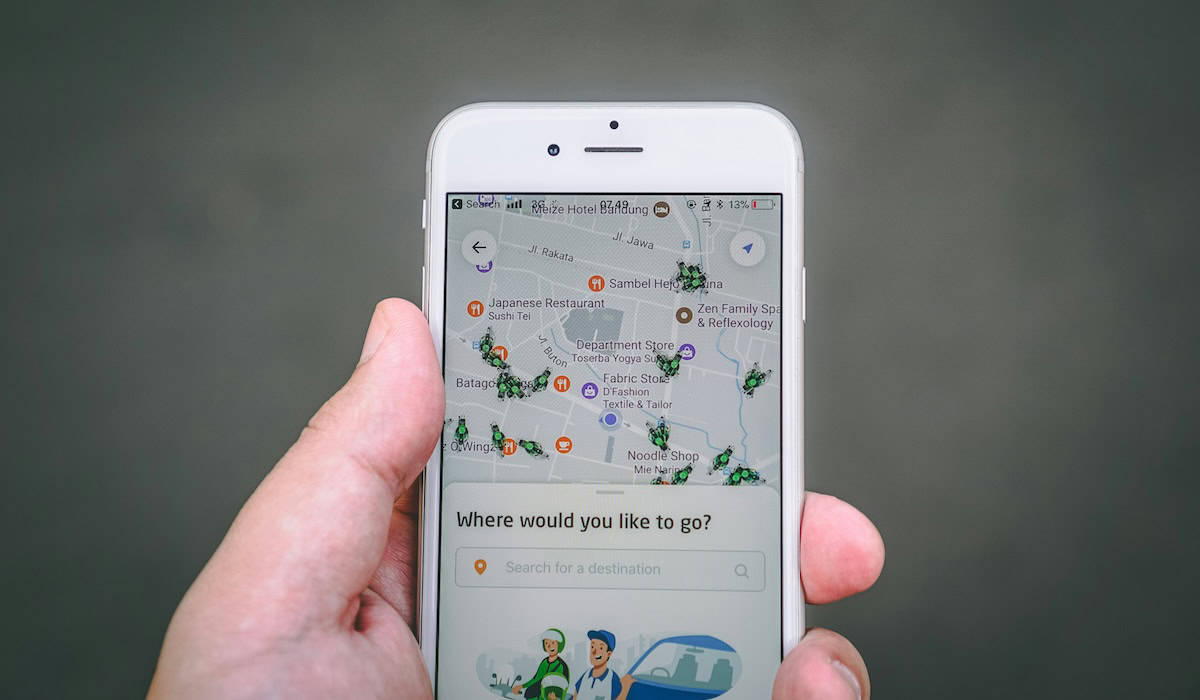
Staying connected while traveling in Asia is important, whether you need maps, ride-hailing apps, or just want to keep in touch. While buying a local SIM card is an option, eSIMs make things much simpler—letting you activate a data plan without visiting a store or swapping out your SIM card.
Asia has reliable mobile networks and plenty of affordable options for tourists. In this guide, we’ll go over the best eSIMs for travelers, what to consider when choosing one, and how to set it up so you’re ready to go as soon as you arrive.
What to Look for in a eSIM
Not all eSIMs are the same, so it’s important to choose one that fits your travel needs. Here are the key factors to consider:
- Coverage & Network Quality – Asia has strong mobile networks, but not all eSIM providers use the best ones. Look for eSIMs that connect to reputable local netowkrs, which offer the best coverage across cities and islands.
- Data Allowance – Consider how much data you’ll need. If you only need internet for maps and messaging, a smaller plan will work. For streaming or frequent browsing, opt for a larger data package.
- Plan Duration – Tourist eSIMs come with different validity periods, from a few days to a month. Make sure the plan lasts for your entire trip.
- Hotspot Tethering – If you plan to share your connection with a laptop or another device, check whether the eSIM allows hotspot usage. Some restrict tethering, while others offer unlimited sharing.
- Ease of Activation – The best eSIMs are easy to set up, with a QR code for instant activation. Some require an app, while others work straight from your phone’s settings.
- Price & Value – Compare prices between providers, but also consider the network quality and data limits. A slightly more expensive eSIM with better coverage may be worth it.
Best eSIM Providers
| eSIM Provider | Key Features |
|---|---|
| Airalo | Unlimited data plans, easy setup, works in multiple countries |
| Nomad | Competitive prices, multiple data plans, easy top-up |
| Holafly | Unlimited data, ideal for heavy users, easy activation |
| Local Asian Telecom eSIMs | Best local rates, network reliability, possible local phone number |
There are several good eSIM options for tourists in Asia, each with different strengths. Here’s a breakdown of some of the best providers and what they offer:
1. Airalo – Popular choice
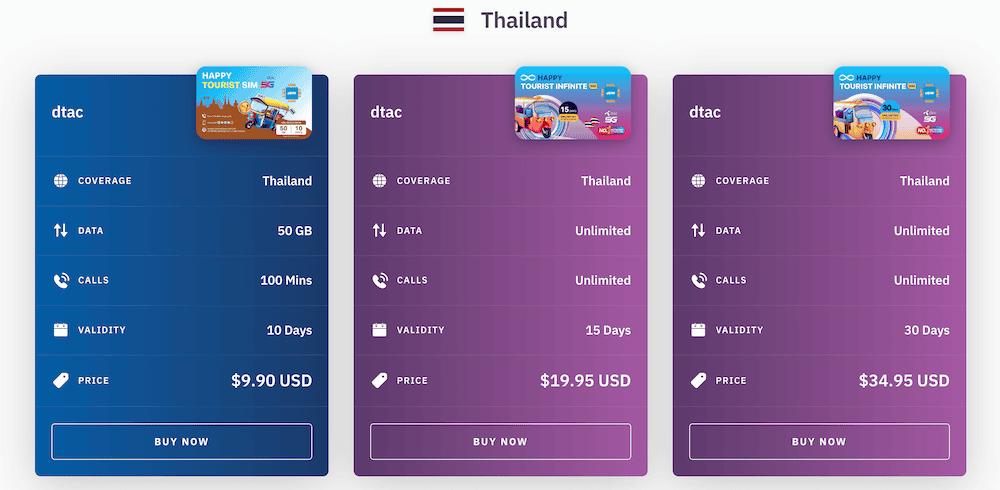
Airalo is a popular choice for travelers because it offers unlimited data plans with instant activation.
Its Asia eSIM connects to local network partners, ensuring good coverage in cities and tourist areas.
Plans start with 50GB data packages but go up to more generous options for longer stays.
Pros:
✔ Simple 3 plan option with option for unlimited data/call plans
✔ Easy to set up via QR code
✔ Works in multiple countries if you require regional coverage (Asia trip)
Cons:
✘ Only 3 plans available, so not flexible for shorter trips
2. Nomad – Competitive Prices with Multiple Data Plans
Nomad offers reasonably priced data plans with solid network coverage, connecting to local network providers depending on availability.
Their plans are ideal for both short-term and long-term stays, with data packages that can be topped up easily through their app.
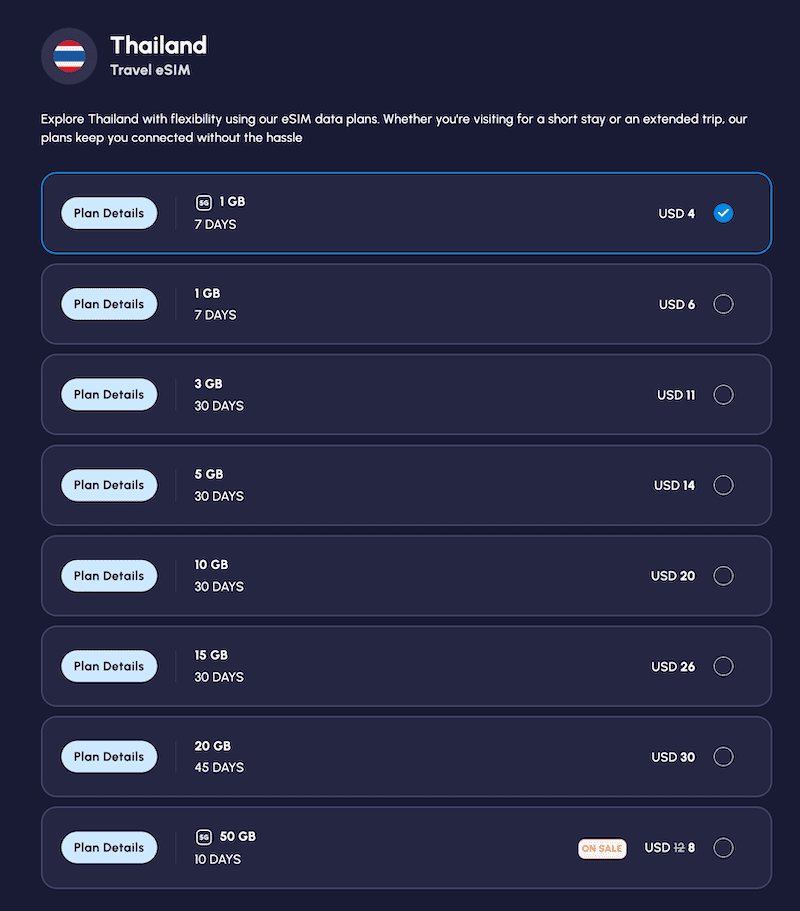
Pros:
✔ Good balance of price and coverage
✔ Works with major local mobile networks
✔ Supports hotspot tethering
Cons:
✘ No unlimited data plans
✘ No local phone number
3. Holafly – Unlimited Data for Heavy Users
If you plan on streaming, video calling, or using data heavily, Holafly’s unlimited data plans could be a great choice.
Their Asia country specific eSIM provides unrestricted internet usage, so you don’t have to worry about running out of data.
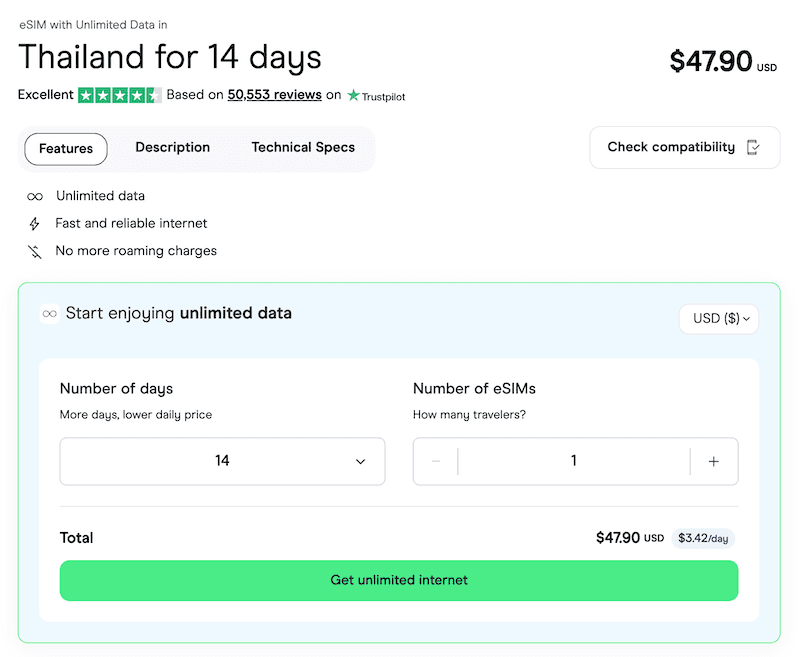
Pros:
✔ Unlimited data for worry-free usage
✔ Easy activation with QR code
✔ Works with major local networks
Cons:
✘ More expensive than limited data options
✘ No local phone number
4. Local Asian Telecom eSIMs
For the best local rates and network reliability, consider getting an eSIM directly from a local telecom provider.
These eSIMs provide are generally cheaper compared to global eSIM providers.
They also often include a local phone number, which is useful for ride-hailing apps, food delivery, or local calls.
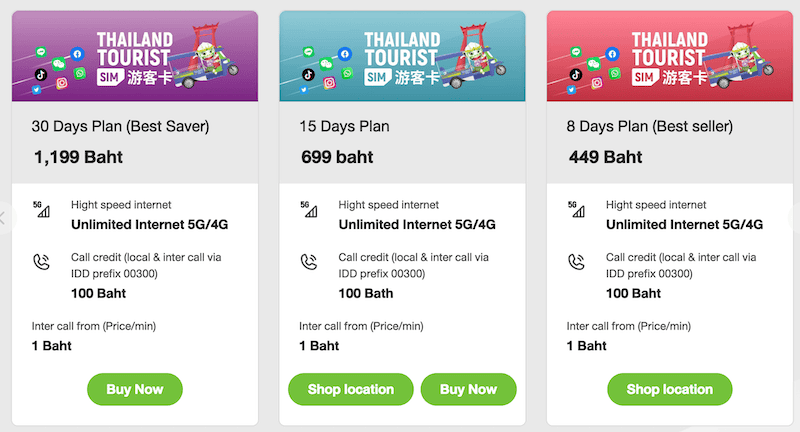
Pros:
✔ Can include a local phone number for local calls
✔ Competitive prices compared to international eSIM providers
Cons:
✘ May require registration with a passport at a local store
✘ Setup process can be more complicated than global eSIMs, which can be activitied before a tirp
Which eSIM Should You Choose?
If you’re on a budget, Nomad or local eSIM provider are great options.
They offer affordable plans, solid coverage, and data packages that are perfect for tourists, making it easy to stay connected without overspending as you explore Asia.
If you’re a heavy data user or need unlimited access, Holafly and Airalo are great options. Holafly offers unlimited data, perfect for streaming, using Google Maps, or sharing your travels on social media.
Airalo is another solid choice with simple plan structures and an easy setup before your trip.
Both let you hit the ground running without worrying about running out of data, so you can stay connected throughout your travels.
How to Set Up and Activate eSIM
Setting up an eSIM in Asia is quick and easy, but the exact steps depend on the provider. Here’s a simple guide to help you activate your eSIM and get connected:
1. Check If Your Phone Supports eSIM
Before purchasing an eSIM, ensure that your device is eSIM-compatible. Most modern smartphones, including iPhones (XR and later) and newer Android devices like Samsung Galaxy and Google Pixel, support eSIM. You can check in your phone’s settings:
- iPhone: Go to Settings > Cellular > Add Cellular Plan
- Android: Go to Settings > Network & Internet > SIMs
If your phone doesn’t support eSIM, you’ll need to use a physical SIM card instead.
2. Purchase an eSIM Plan
Choose an eSIM provider based on your needs:
- For budget-friendly and flexible data: Nomad or local regional number
- For unlimited data: Holafly or Airalo
Buy the eSIM through the provider’s website or mobile app. After payment, you’ll receive a QR code or a manual activation code.
3. Install and Activate Your eSIM
Once you receive the eSIM details, follow these steps:
- iPhone Users:
- Go to Settings > Cellular > Add Cellular Plan
- Scan the QR code provided by the eSIM provider
- Follow the on-screen instructions and set the eSIM as your primary or secondary data plan
- Android Users:
- Go to Settings > Network & Internet > SIMs > Add Mobile Plan
- Scan the QR code or enter the activation details manually
- Confirm and enable the eSIM for data usage
4. Configure Data Settings
Some eSIMs require APN (Access Point Name) settings to be updated for proper connectivity. If your provider provides APN details, enter them manually in your device’s settings under Mobile Network > Access Point Names (APN).
5. Turn on Data Roaming (if needed)
Most eSIMs require data roaming to be turned on, even if they are local eSIMs. You can enable this in:
- iPhone: Settings > Cellular > Cellular Data Options > Data Roaming
- Android: Settings > Network & Internet > Mobile Network > Roaming
6. Test Your Connection
Once activated, check your signal strength and internet connection by opening a webpage or using an app. If it’s not working, try restarting your phone or ensuring that data roaming is enabled.
Maximizing Your eSIM
Having an eSIM in Asia ensures seamless connectivity, making it easier to navigate, book accommodations, and stay in touch while traveling.
One of the most practical benefits of an eSIM is effortless navigation. Apps like Google Maps and Grab rely on real-time data, helping you find your way, book transport, or locate nearby attractions without interruption.
Likewise, an active internet connection simplifies hotel and activity bookings through platforms like Agoda and Booking.com, ensuring you can secure reservations on the go.
Staying connected also enhances your social experience. With an eSIM, you can instantly share your travels on social media without relying on public Wi-Fi.
It’s equally useful for translation apps like Google Translate, which can be a lifesaver when ordering food, shopping at markets, or asking for directions.
Most importantly, in emergency situations, a stable internet connection allows you to make calls, send messages, or access critical information when needed.
To get the most out of your eSIM, activate it before you arrive in Asia to avoid any setup issues. Be mindful of data caps on certain plans and track your usage to prevent running out at inconvenient times.
Whenever possible, connect to hotel or café Wi-Fi to conserve mobile data. It’s also wise to have a backup option, such as a physical SIM or a secondary eSIM provider, in case of network issues.
Lastly, if you’re planning to visit multiple Southeast Asian countries, consider an eSIM with regional coverage to save both time and money.